Every guest, every room, every shift, on one system
Guests write in five languages from the booking sites, email and WhatsApp, room status travels by radio, and the rota is a spreadsheet. Bring it into one place that knows every guest and every room, and put AI teammates on the work in between.

Good hotels, held together by the front desk
Most hotel groups your size run on a property-management system that knows the bookings, and a dozen tools and WhatsApp groups that know everything else. It works until a guest arrives at eleven and their room is still dirty.
- Guests write everywhere, in every languageEmail, WhatsApp and three booking sites, in five languages. The front desk pastes each one into a translator, and an early check-in reaches housekeeping after the guest does.
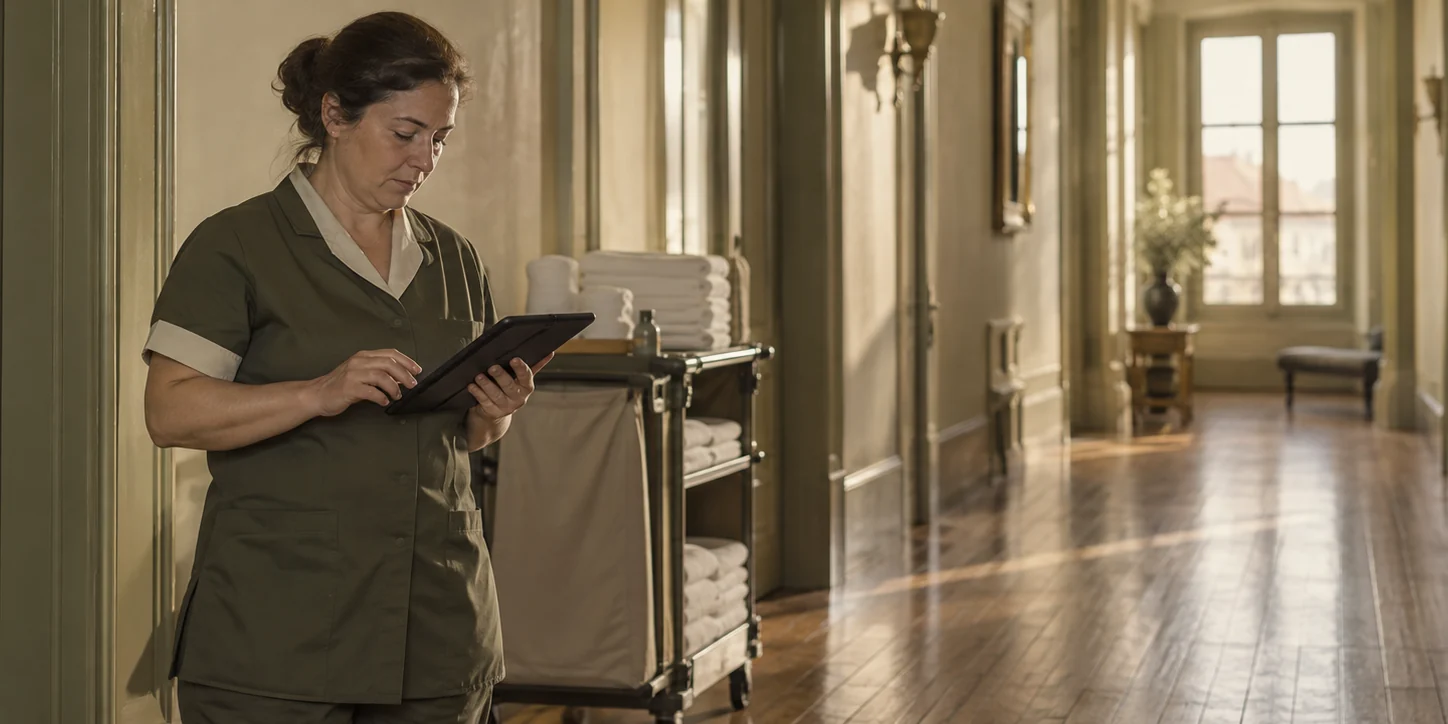
- Room status travels by radioHousekeeping ticks rooms off on a paper sheet. Reception calls up to ask if 214 is ready while a family waits in the lobby with its bags.
- Repairs live in a WhatsApp groupA dripping tap reported at midnight is scrolled past by morning. The room is sold again before anyone fixes it, and the review says so.
- Groups run on emailed spreadsheetsA wedding’s rooming list changes six times. The kitchen counts covers from version four, and the invoice goes out from version five.
- Microsoft 365 Business Standard
- Microsoft 365 F3
- RingCentral Core
- Zendesk Suite Team
- HubSpot Sales Hub Professional
- Calendly Teams
- Mailchimp Standard
- Asana Starter
- Zoom Workplace Pro
- Otter Business
- Power BI Pro
$84,350$0 a year, at list price, for Sarmento’s 11 subscriptions
 Sarmento HotelsLisbon, Portugal
Sarmento runs three boutique hotels and two restaurants in Lisbon’s old neighborhoods, for travelers who would rather stay in a house than a chain.
Rui and Helena Sarmento opened the first one in 1996: eleven rooms in a merchant’s house in Alfama. Their daughter Marta runs the group now, 194 rooms across Alfama, Chiado and Lapa, on a property-management system that knows the bookings and eleven subscriptions that don’t talk to it.
- 210
- people
- 3
- hotels
- 194
- rooms
- 2
- restaurants

Marta Sarmento CEODesigns Sarmento’s system with OpenLazarus in the film below.
Sarmento Hotels is an invented example, not a client: a company like the ones we build for, made up to show how one would run on OpenLazarus. Its people, numbers and photographs are illustrative.
What Sarmento runs on it
The modules carry their names, not ours, and the AI teammates work on the same guests, rooms and shifts their people do.
- BookingsRooms, tables and groups, read from the PMS and the booking sites into one list
- Rooms194 rooms by status, from departure to inspected, live at every front desk
- RequestsEvery guest request and every repair, with an owner and a time
- GuestsEvery guest’s stays, language and preferences, in one record
- GroupsWeddings, retreats and corporate blocks, from enquiry to rooming list
- PhoneEight lines for reservations, the three front desks and both restaurants
- ReportsOccupancy, average rate and RevPAR by hotel, every morning
 Omar HaddadAIGuest messagesAnswered 186 guest messages in five languages since midnight
 Diego AlvarezAIHousekeepingPut 64 arrivals in cleaning order across three hotels, early check-ins first
 Mei TanakaAIMaintenanceSent the on-call technician to a leak above Chiado 304 at 05:52 and took the room off sale
 Amara DialloAIRotasFound cover for two room attendants who called in sick before the 07:00 shift
Companies like Sarmento usually start with Omar, Diego and Amara.
What it could change in a year
An illustrative estimate for Sarmento, worked from its example numbers: the subscriptions it would stop paying for, the hours its people would get back, and the guests who hear back in minutes.
- $20,300
- a year it would keep after paying for Lazarus, its server, eight phone lines and an engineer’s time
- 7,200
- hours a year it would give back to the front desks, reservations and housekeeping
- 4 min
- to answer a guest’s message in their own language, down from 2 h 40 at the front desk
Example figures for an invented company. The savings and hours are worked out from its example tools and plan at list prices; the third figure is an illustrative goal, not a measured result.
Run your hotels on a system you own
Tell OpenLazarus how your hotels work, from the first message to checkout. You’ll see your system take shape in the conversation, with your names, your teammates and what it saves.
We already have a PMS. Do we have to replace it?
No. The PMS stays the record of reservations, rates and folios. Lazarus reads arrivals, departures and room status from it and writes back what changes, so housekeeping, repairs and each guest’s messages sit beside the booking instead of in a WhatsApp group.
Can it answer guests in their own language, on the booking sites too?
Yes. The guest messages teammate reads email, WhatsApp and the booking sites’ inboxes, replies in the guest’s language and files each request where it belongs. Anything about money, a complaint or a guest’s health goes to a person.
What about our guests’ personal data?
The system runs on your own server, which can sit in the EU, and you own the data. Guests’ details live in one place instead of eleven, which makes GDPR access and deletion requests simpler to answer.
Who decides what the AI is allowed to do?
You do, per teammate: what they handle on their own, and what they ask first, such as a gesture over €300 or a repair over €1,000. Every action is logged where your managers can see it.
How long does it take to set up, and what changes for our people?
The design takes one conversation with OpenLazarus, like the one in the film. Our engineers then connect your PMS, booking sites and phone lines, usually within a few weeks. Room attendants mark rooms from a phone, and the front desk works from one screen instead of six.